In the first quarter of 2026, Vietnam’s livestock sector showed relatively clear signs of recovery after a prolonged period of volatility. However, this growth was uneven across animal species and remained significantly affected by input costs and disease risk. Overall, the sector is moving toward restructuring, in which large-scale operations with full vaccination coverage, strong biosecurity and integrated value-chain linkages continue to hold the advantage.
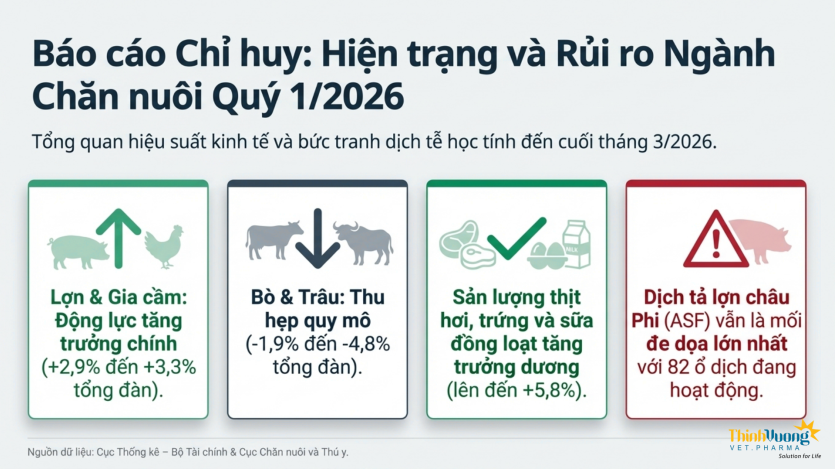
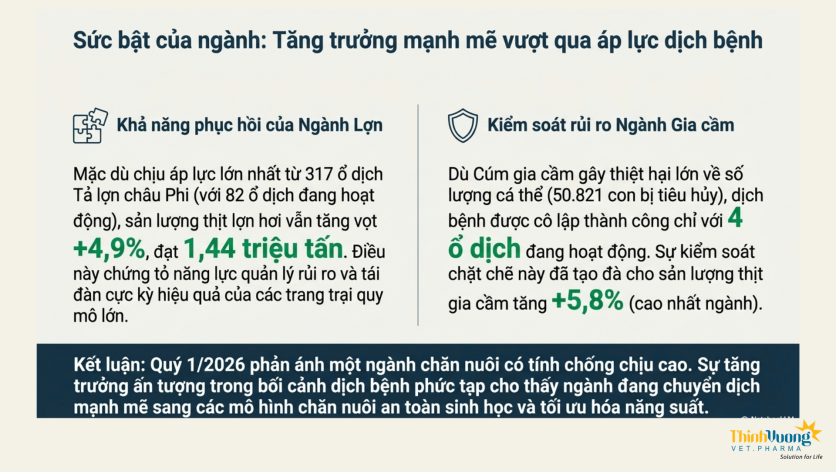
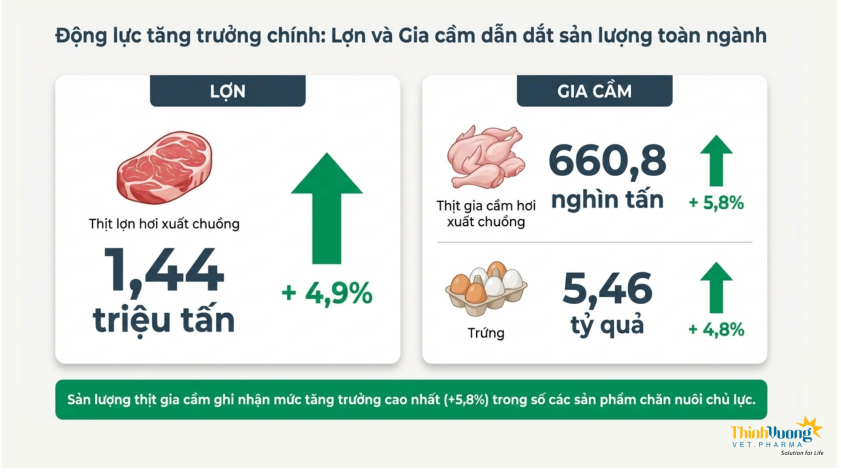
Pig sector. Pigs were the segment with the strongest recovery in early 2026. Live pig prices remained relatively stable and African swine fever (ASF) was largely under control, creating favorable conditions for herd rebuilding. Both the total pig inventory and live-weight meat output increased compared with the same period last year, reflecting gradually strengthening producer confidence. However, the recovery is concentrated mainly in medium- and large-scale farms, while smallholders continue to face considerable cost and disease risks.
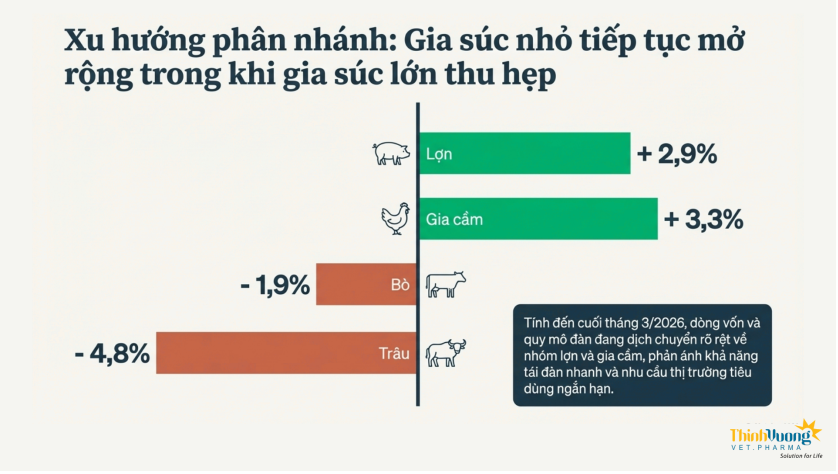
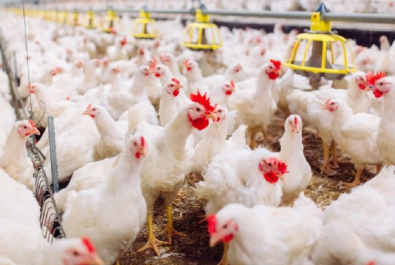
Poultry sector. Poultry remained a stable bright spot for the industry, sustaining growth in both flock size and output. Steady domestic demand and relatively stable selling prices provided a favorable basis for producers to expand production. In addition, the increasingly widespread adoption of biosecure production models and value-chain integration has helped improve production efficiency and reduce disease risk. This is regarded as a highly sustainable segment in a market that remains volatile.
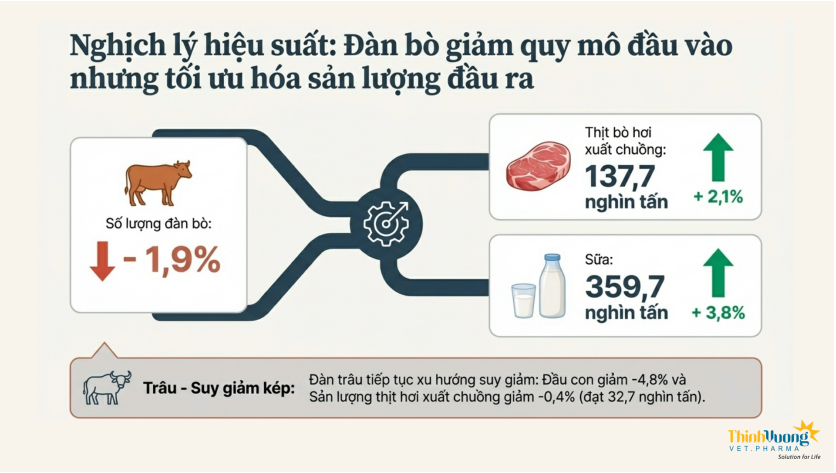
Buffalo and cattle sector. By contrast, buffalo and cattle production continued to face difficulties, with no clear signs of recovery. Total herd numbers tended to decline owing to low profitability, long production cycles and adverse factors such as natural disasters and a shortage of green forage. This points to an ongoing structural shift in the sector, as producers increasingly favor species with faster capital turnover and better market adaptability.
Input cost pressure. One of the greatest challenges for the sector at present is input cost pressure. Feed prices remained high because of heavy dependence on imported raw materials, while transport and logistics costs have yet to ease. Several companies raised feed prices in March, directly squeezing producers’ profit margins, particularly for smallholders. In this context, the ability to control costs and optimize production efficiency has become a matter of survival.
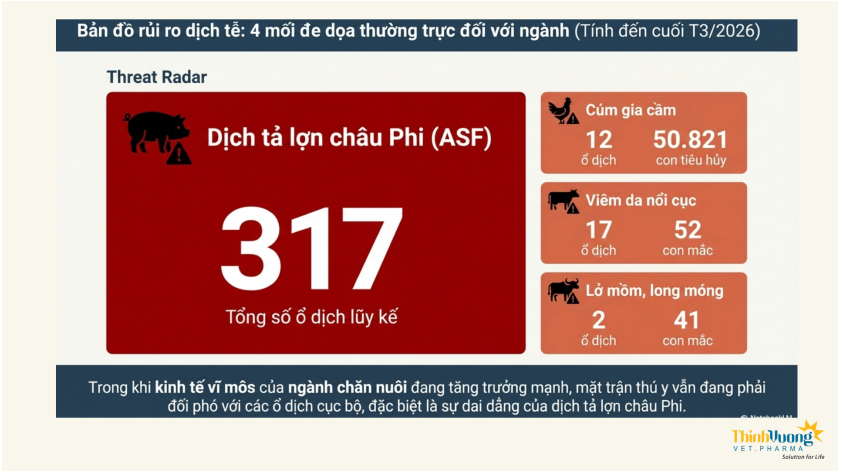
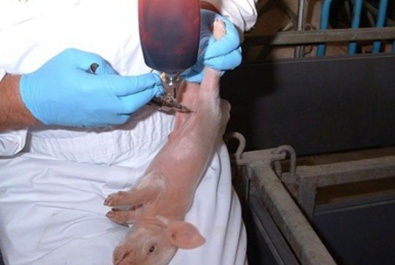
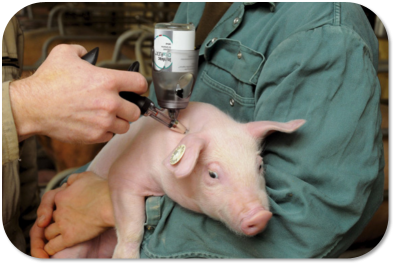
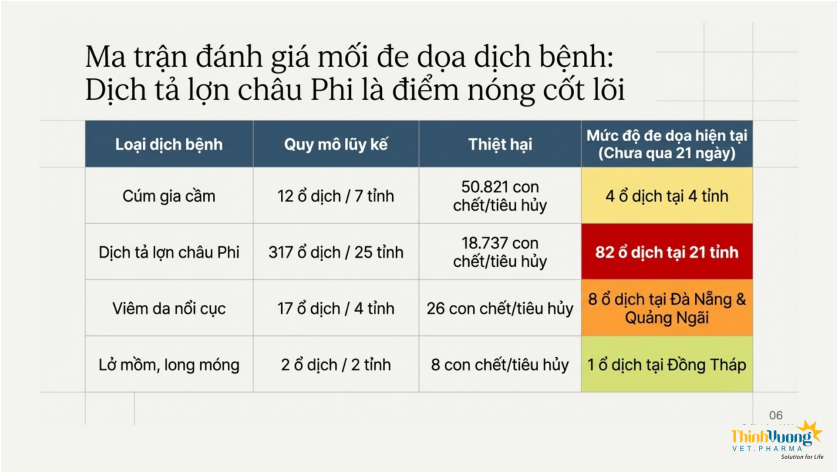
Disease risk. Beyond economic factors, disease remains a latent risk that must be tightly controlled. Although major outbreaks have been contained, dangerous diseases such as ASF, avian influenza and lumpy skin disease (LSD) continue to appear sporadically in many localities. In practice, most outbreaks occur in areas that have not strictly complied with biosecurity measures and vaccination, which underscores the pivotal role of proactive disease prevention, including well-controlled biosecurity procedures, in modern livestock production.
Outlook. Overall, Vietnam’s livestock sector in Q1 2026 is entering a recovery phase accompanied by a demand for strong restructuring. Development in the coming period will focus on raising productivity, controlling disease, reducing dependence on imported raw materials and promoting value-chain integration. In this context, only production models that are highly adaptable, manage costs well and adopt new technologies will be able to sustain growth and capture market opportunities.